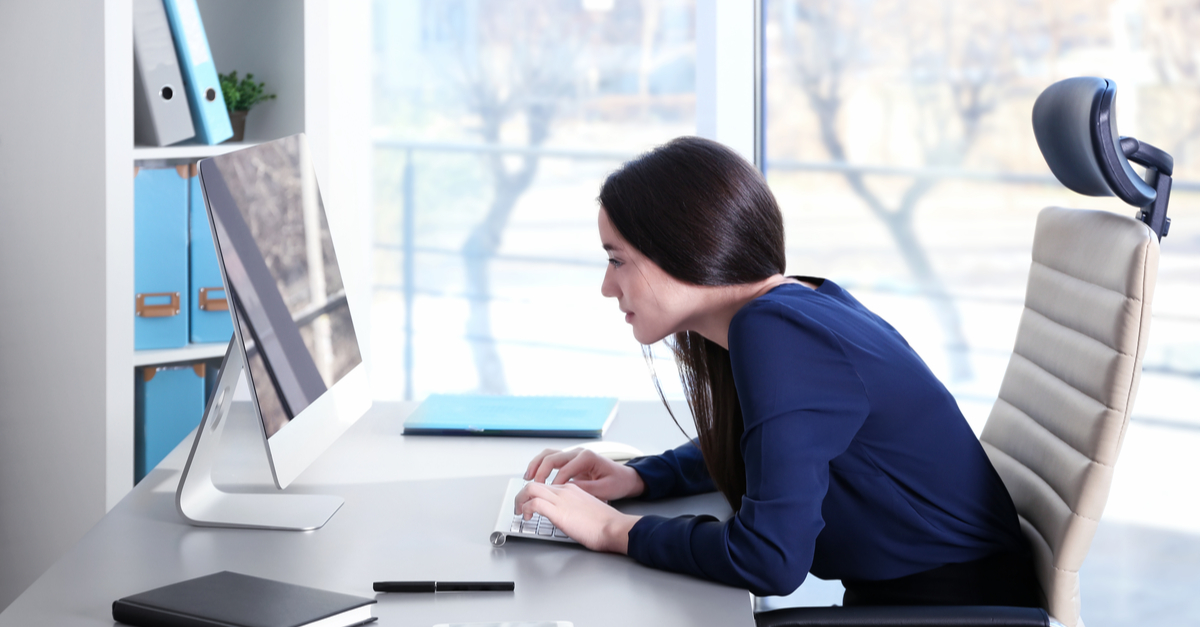
Thirteenth: Sit up straight & belly breathe

Posture check. How’s your posture as you read this?

Most of the neck and shoulder pain we experience is a symptom of bad posture, and we experience a lot these days. We drive in front of us, use computers in front of us, I’ve even heard of ‘text-neck’ pain as a result of our mobile phone addictions. Our chests are tight, our shoulders are forward, and our backs are weak. We make it even worse with chest-breathing.

Take a deep breath. Did your shoulders and chest lift or did your rip cage expand? Most of us are chest breathers. We only fill a portion of our lung capacity and end up using our necks for every breath. As you can imagine, over time this causes serious repercussions- we take a lot of breaths each day!

Try sitting up straight and taking 20 belly breaths a day. Its hard, especially in good form. Start laying down on the ground and with your spine in a neutral position, breathe in and out and watch your belly expand, three seconds in, three out. Squeeze your belly to decompress the bottom of your lungs (WITHOUT LIFTING YOUR SHOULDERS OR CURLING YOUR SPINE), and repeat. Strengthening and activating your intercostal muscles to breathe with proper neuromuscular patterning will save you a ton of money in physical therapy and a huge ‘pain-in-the-neck’ (sorry I had to).


image credit: shutterstock.com

Twelfth: Be a Skeptic

First, I was so skeptical that’s how you spell twelfth I had to Google it, it looks funny. See post ten for such tech truths. Its admittedly hard to do this without seeming pessimistic, sorry I can’t help anyone on that one. But, being a skeptic is part of my job as a scientist, which is part of why I like science so darn much.

Every study is flawed. Every history is biased. Even current events are riddled with opinion.  Don’t believe what everyone says, or anyone. There are few experts in any topic, and almost every situation is different; broad and generalizable conclusions are almost impossible.

Its not that hard to Google (Google Scholar is better), but people seem to still make factual statements that aren’t fact. One time my mom told me Alaska Airlines was the safest airline in the sky. So I looked up the statistics from the Federal Aviation Administration and we both learned that was incorrect.

I recently saw an article passed around on social media and when I looked up the author of this piece, technically an opinion on current events, he had recently published several articles asserting the exact opposite opinion. He was catering his opinion/media to his audience. Everyone is trying to make a buck, attract clicks, and earn likes. Don’t let the wool be pulled over your eyes.

The point is, look it up. Find multiple sources, figure out their motivations, and recognize the limitations. NOTHING is black and white. There are literally no statements about anything I can’t find a hole in. Try me.

Eleventh: Resilience, Part 1. Life Tests Your Limits

The limits of your strength, kindness, and vulnerability are tested over and over in life. Certainly, life events and circumstance contribute and may be out of your control, but resilience is always in your control. Resilience is a unique character trait that is revealed by concrete examples of overcoming a challenge. Resilience is how you ‘keep on keepin’ on’, and it seems to be human nature to observe the limits of the resilience of their peers. It’s as if we understand ourselves and our own resilience by better by calibrating that of the people around us. There is probably a psychologist that has studied this somewhere and one day I’ll look for a reference, for now this is a lesson learned from personal experience.

What I mean by calibrating is, just like happiness, I believe strength and resilience are relative concepts. Happiness is relative, the way people rate their happiness is dependent on how they would rate their communities perceived happiness. Basically, it seems that people test your strengths to measure their own strength. They predict how they would respond to a particular stressor or action and your response is their reference point for their own resilience. If they perceive you as strong, they will continue to push your limits to see the threshold of your strength. If you demonstrate weakness, people use that as a reference point and can perceive themselves as more resilient. I have found that the stronger you look, the more your limits are tested. Weak people tend to get less flack, because they can’t ‘handle’ it. Ever noticed the one person that’s always the butt of your friend’s jokes? That’s the person that can joke with you, laugh along, and they can handle you giving them a hard time. You’ll never see a sensitive person in that position, their character limits are understood and its just not worth it.

The next paragraph is very nerdy, forgive me. To be resilient is a lesson is taught to us from a very young age; Disney movies all feature a main character with at least one dead parent (I believe the only two exceptions are 101 Dalmations and Lady and the Tramp, but I’m too old to keep up). Walt Disney was obsessed with resilience, he was an orphan himself. Perhaps he felt is was part of his own success and he started exposing us to that character trait early. My favorite examples of resilience are Harry Potter of the 7-part Harry Potter Series (duh) and Ender Wiggin of the Ender’s Game series. Both characters appeared strong and they suffered for it as their limits were tested. Harry was ‘the chosen one’ and time after time his limits were tested by his peers (not just Draco, all of them), his professors, and of course- every possible bad thing that could happen- did. The same thing happened to Ender Wiggin, who was brilliant and rose to a leadership position at a very young age. He was bullied and targeted by fellow students and his instructors. They were both called out regularly and often got in trouble as an example was made out of them for the benefit of the group. People expected more from them. But, they had resilience. Resilience helped both of them to overcome much greater challenges that were well beyond their known limits. Resilience is a character trait that can be developed and is in your control.  That “life is 10% what happens to you and 90% how you react to it” quote is sickeningly true.

Life is hard. In the end, human nature is to test the limits of the strength and resilience of your peers, but this turns out to be a mutually beneficial practice. We strengthen each other by testing our limits- only the strong survive.

Stay tuned for Resilience Part II: Test Your Own Limits First, up next Monday.

Happy Monday!


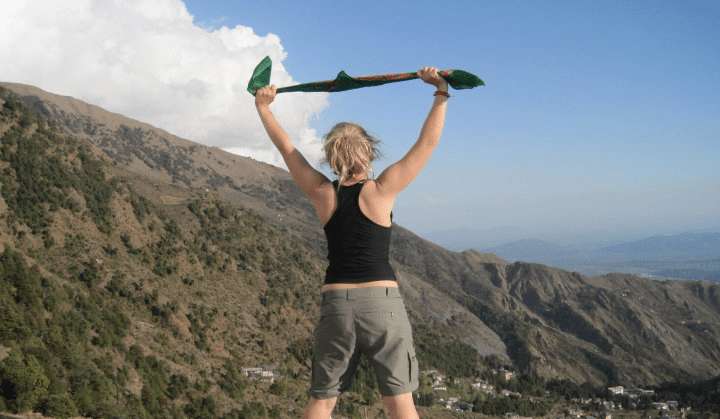
*This photo of me doing an ab exercise (yes, that’s a side bend) was taken at the half-way point while climbing up the mountains of the Himalayas in North India in 2010. Warm memories, indeed.


Tenth: Ten Tech Truths


  1. Calibri is the worst font of all time. Second only to Comic Sans.
  2. If you are currently over 45, you are 100 times more likely to double space after a sentence.
  3. Everyone knows their best selfie angle- every one.
  4. The class of 2005 may be the last cohort that didn’t have Facebook (or Myspace) in high school. That developmental divide will become more clear as time goes on.
  5. Kids today (by that I mean college students) don’t know what the internet sounded like in the new millennium. If you’re one of those individuals, please follow this link to educate yourself. If you’re my age, follow this link to feel the nostalgia of your early childhood (30 seconds of pure throwback).
  6. 90’s kids miss free AOL trial CD’s and AOL instant messenger. I’ll also throw in that I miss Myst and Encarta.
  7. Seniors are pretty adept at technology- its impressive and another testament to human adaptability.
  8. Spell check has destroyed our ability to spell. I also blame with thesaurus for killing our word retrieval skills.
  9. Increased mobile phone use has resulted in worse working memory skills in our generation than older adults, I’ve seen it in my studies too. When was the last time you had to remember a phone number? I bet the only one you remember is the home number you grew up with and 911.
  10. As Anne Lamott says in her TED talk that inspired this blog, pretty much all technology glitches can be repaired if you unplug, wait 30 seconds, and re-plug.


image credit: shutterstock.com


*Bonus tech truth: When you see a typo you look at the keyboard and judge someone’s competency by the distance between the key the did hit and the key they should have.

Ninth: Leggings are…

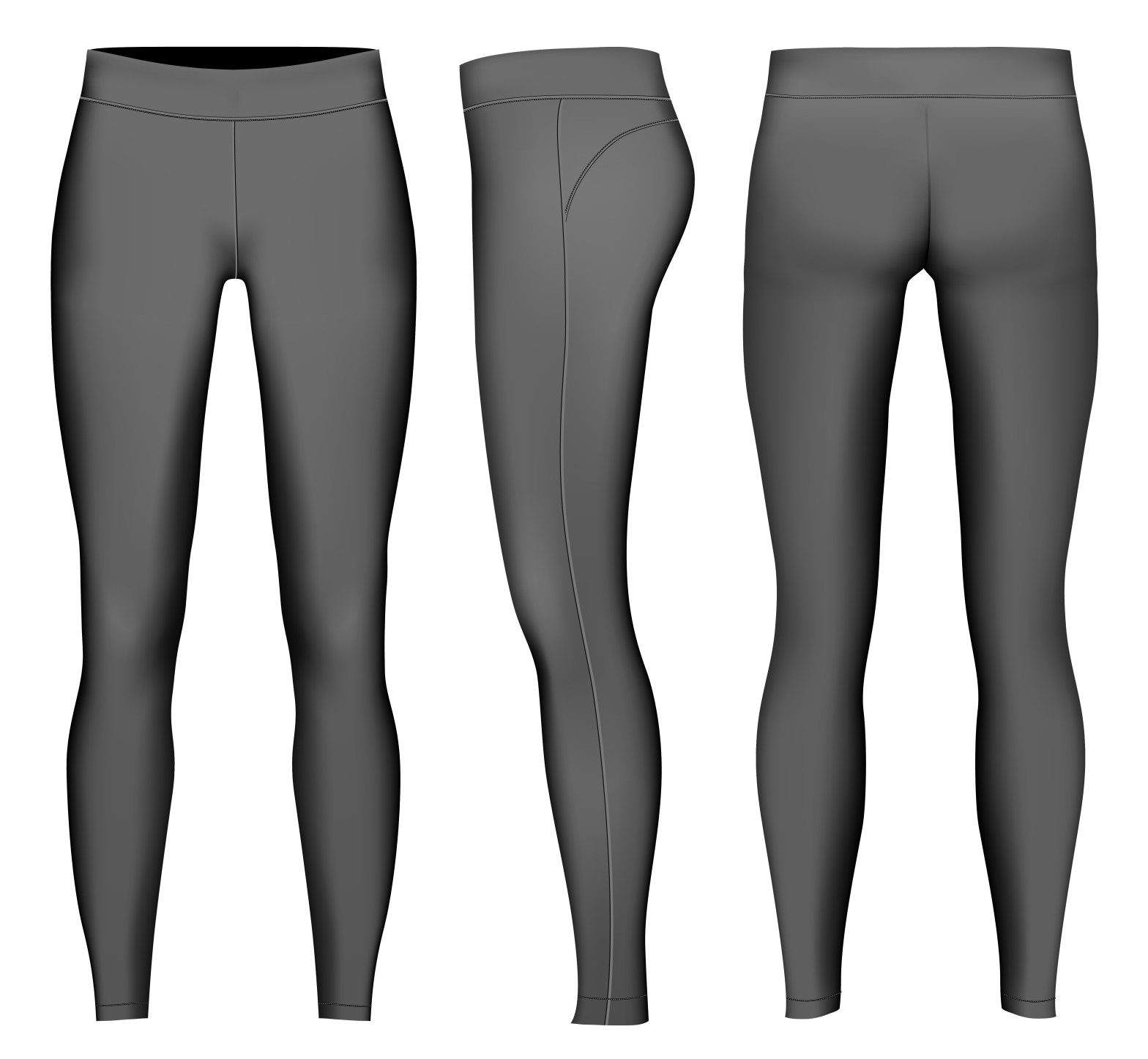
Definitely pants. When jeans or slacks can let me sit down, eat, or pick something up without falling down, bunching up, or getting tight in all the wrong places- then maybe maybe maybe I’ll agree leggings aren’t pants. For now, that’s far from the case, most pants are downright awful. Don’t make women’s fashion suffer more, we already have to wear heels. Don’t get me wrong, I love heels, but don’t lie- they hurt. Pants shouldn’t suck, we deserve better! My rule is, as long as you cover your butt you can wear them anywhere! Sorry, I’m not sorry about this one. Long-live athleisure-wear.


image credit: shutterstock.com

Eighth: Single Moms are Superheros

Today is one month from my mom, Veronica Dorothea Miller Dickes’ birthday. We are both Leos, but she’s always shared her light with me. In this spirit, the eighth reflection is that single moms are actual superheros. All moms are superheros, but single moms have to have an extra ‘umph’ to get through the day and to keep their child(ren) alive. I was always grateful to be an only child, simply because more than one of us would have seemed like an impossible burden for my mom to bear and I doubly applaud single mothers of multiple children.

Single parenthood is full of sacrifice. Sacrifice of your time, your body, your money, your sanity. Its not a cliche, I watched my mom give up everything, all so I could have a better chance than she did. Most of what I’ve learned in life, I’ve learned from her and I’m sharing with you. She speaks three languages (Japanese, English, and French) putting any teenager to shame for missing points on an English exam. But as a superhero single mom she had to do everything else, from cleaning up my many cuts and scrapes to somehow wiring our first house with internet (for the youth: back then we used ‘Ethernet cords’ that had to go from your phone jack to your computer for the cyber). I watched her as she struggled to keep the cupboards full and the house clean while working a full-time job. When the old Buick broke down I watched her put on her snow boots and walk a mile in a foot of snow to take a bus to get to work. I saw her suffer as she was too tired to take time for herself by the end of the day. Then every morning she dragged her angsty teenage daughter out of bed kicking and screaming for school, and the cycle continued.

The point really is, single moms are remarkable and sacrifice so deeply its difficult to describe adequately with words. I couldn’t be more proud of her strength and resilience and grateful for her sacrifice. In that photo, you see love her eyes that’s kept both of us going from the day I was born to the day I post this. May we all experience a love so profound.

Seventh: Aging is a Blessing, but Its Not for the Faint of Heart

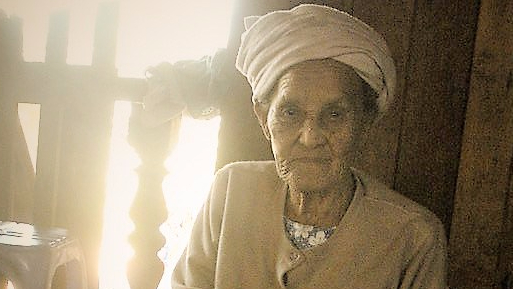
That photo is of the oldest women I have ever met, she was 104 years old and lived with 4 (maybe 5 ) generations of her family in a small village in the mountains of northern Thailand. The blue plastic stool you see is what she used as a walker. When I approached her she was smoking a cigar on one side of her mouth and chewing beetle nut on the other side of her mouth (a commonly chewed red leaf that acts as a stimulant). She was a subject in my very first study, Exploring aging in India and Thailand: Physical function in urban versus rural adults, and since then I’ve continued researching aging in Kinesiology. Most people probably couldn’t turn another year older without thinking about aging, but for me, its a topic I’ve studied for so long that each birthday becomes more meaningful as time goes on. But, as you may have heard before, the more you learn, the more you realize you don’t know- and that balance between knowing a lot and not knowing enough about my future-self is admittedly scary. I’m not scared to get older per say, but I am already gearing up for the challenge.

Aging is a blessing, but its not for the faint of heart” is a quote from my college anatomy teacher, from whom I remember learning a surprising amount, and this quote sticks with me. It couldn’t be more true.

Aging is a blessing. Aging means we get to see another day. Another one of my favorite quotes is, “I’d rather be on the ground and on my knees than six feet under”. I’ve had the privilege of working with older adults for over ten years now (wow).  I learned so much from them. They would never trade being younger for the journey they’ve had. The good times outweigh the bad. Life is far too short as it is and its gone in a flash. ‘Feeling your age’ isn’t really a thing. Losing the people you love is unavoidable. You change, grow, and develop new interests and talents at any and every age. You settle into who you are and what you want, and finally not caring what anyone thinks anymore means you live your best life. Its never too late. Family and companionship are everything. A purposeful life is a happy life. Most importantly they taught me that life is so good, and no matter how bad things get- those times will pass, and life is always worth fighting for.

But, getting older is not for the faint of heart. The ‘greatest generation’, our current senior citizens, have lived through so much history and demonstrate such resilience.  Beyond adapting to the greatest industrial and technological evolution to date, they survived the depression, world wars, and countless accounts of personal tragedy. Unfortunately, today’s older adults deal with the repercussions of living longer without the benefits of preventative medicine (like exercise). That means those individuals never knew exercise was good and smoking cigarettes, sunbathing, and dumping sugar in everything was bad for you- but they’re living longer anyway and often have chronic preventable diseases (diabetes, cardiovascular disease, etc.). This leads to older adults suffering increased medical costs and financial burdens, losing their independence, and lowering their quality of life. I’ll try not to bore you with too much science, but the gist is that modern medicine allows us to live much longer, but maybe not better.

In the face of too much knowledge, I can only let go and focus on aging gracefully. As an aging researcher, I know that that no matter your age, you can always improve- the earlier you start the better. I find myself finally understanding all of the advice and wisdom I’ve heard from those older and wiser. I can already see the signs of time and stress taking its toll and my ‘prime’ has long passed (I think I aged at least ten years while I was trying to qualify for my PhD). It’s funny how you really don’t notice on a day-to-day basis, but I look back at (pre-facebook) photos and that’s when I see the shocking baby-face that is past-self. I can only take solace in this: after all of the scars and stories, I feel like I’ve already lived several lifetimes and I really wouldn’t trade places with that baby-faced little girl.

Indeed, it is a greater demonstration of strength to embrace aging than to run from it. I hereby pledge to fight the urge to fight the aging process in gratitude for another day. I look forward to sharing the passage of time with you all.

Side note: Okay Okay, I have to throw some science out here. My quick-lesson from my research is that if you walk slowly in older age, especially when you’re doing two things at once, you are more likely to be mobility impaired [1], suffer an injurious fall [2], or have mild cognitive impairment [3].

Power walk, people.


1) Auvinet, B., Touzard, C., Montestruc, F. Delafond, A. & Gelb, V. (2017) Gait disorders in the elderly and dual task gait analysis: a new approach for identifying motor phenotypes. Journal of NeuroEngineerng and Rehabilitation, 14, 7.

2) Nordin, E., Moe-Nilssen, R., Ramnemark, A., & Lundin-Olsson, L. (2010). Changes in step-width during dual-task walking predicts falls. Gait Posture, 32(1), 92-97.

3) Segev-Jacubovksi (2011) The interplay between gait, falls and cognition: can cognitive therapy reduce fall risk? DOI:10.1586/ern.11.69.
 

Sixth: Learn to Like Being Alone

Being alone and silent with your own thoughts can be difficult. This is especially true in the modern age of technology and bombarding media, and I’m afraid that we don’t give ourselves the chance to sit silently with our thoughts. I also fear that our relationships with others suffer because we can’t even stand to be alone- how could we expect anything different?

The worse my state of being, the harder it is to be alone with my thoughts. I have learned that the clearest symptom of happiness is the ability to enjoy time alone, try it.


image credit: shutterstock.com

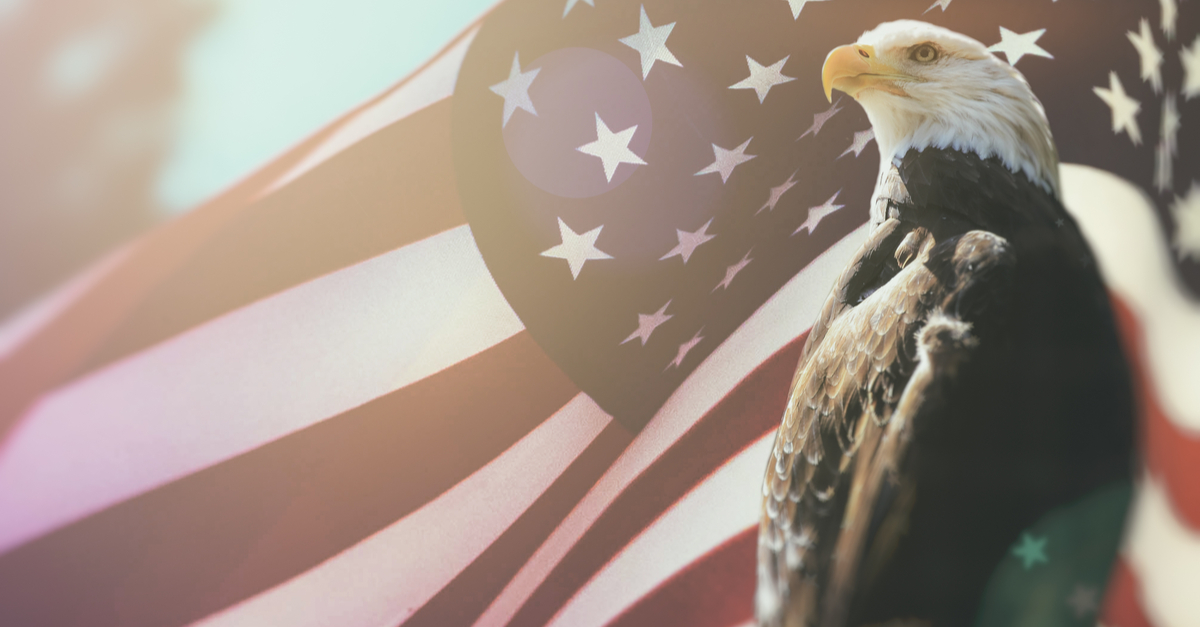
Fifth: Celebrate Independence Day + Independent Women

Happy Fourth of July, America! Today is also known as Independence Day, the technical name, I think. As a woman, this holiday has inspired a reflection on what popular culture has recently deemed the ‘independent woman’- but it usually refers to a lady that can pay the bills. Admittedly, there is a lot more to this topic that is beyond the scope and spirit of this post (i.e. a term that would be more gender-inclusive). For now, I’ll keep it simple and use Independence Day to remind us of what an independent woman really is.

I was primarily raised by women and throughout my life I’ve been mentored by several strong, independent women who shine as examples of brilliant and independent people that happen to be female. Today, we very briefly pay homage to what I define as an independent woman, acknowledging the aspects that femininity brings to independence. Despite being terrible at paying bills (eternal student life), I sort of consider myself an independent woman and we all know at least one. My suspicion is that each of us also carries a bit of independent woman that deserves attention and recognition.

Independent women have overcome challenges in the past and will do it again.

Independent women embody and embrace their identities.

Independent women develop interests and hobbies.

Independent women don’t shy away from a problem, they try to solve it.

Independent women work for short and long-term goals and aspirations.

Independent women are self-aware, optimizing their strengths and weaknesses.

Independent women are capable.

Independent women always move forward. 


Happy Independence Day, everyone!


*Remember, no politics!

image credit: shutterstock.com

#ladybaldeaglesarepatriotictoo #ladyeagle #feminism


Fourth: Wine & Cheese with Friends is Therapy

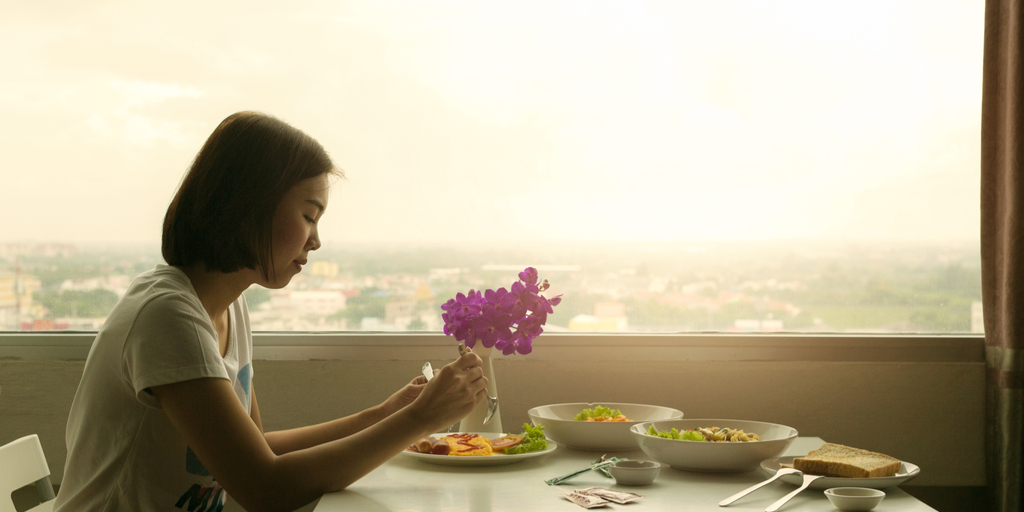
Whether its wine and cheese, schooner-sized-beers and nachos, or coffee and cake, getting together for a conversation with a friend is as good as going to therapy.

The French really have this down, they eat with friends and family for hours. Appetizers start at 7:30 or 8, drinks flow, and the food comes out around 11 or midnight, then there’s cheese, and the drinks continue to flow! Note, the French tend to live long healthy lives.

Make time to bring people together occasionally, it makes life better.


image credit: shutterstock.com